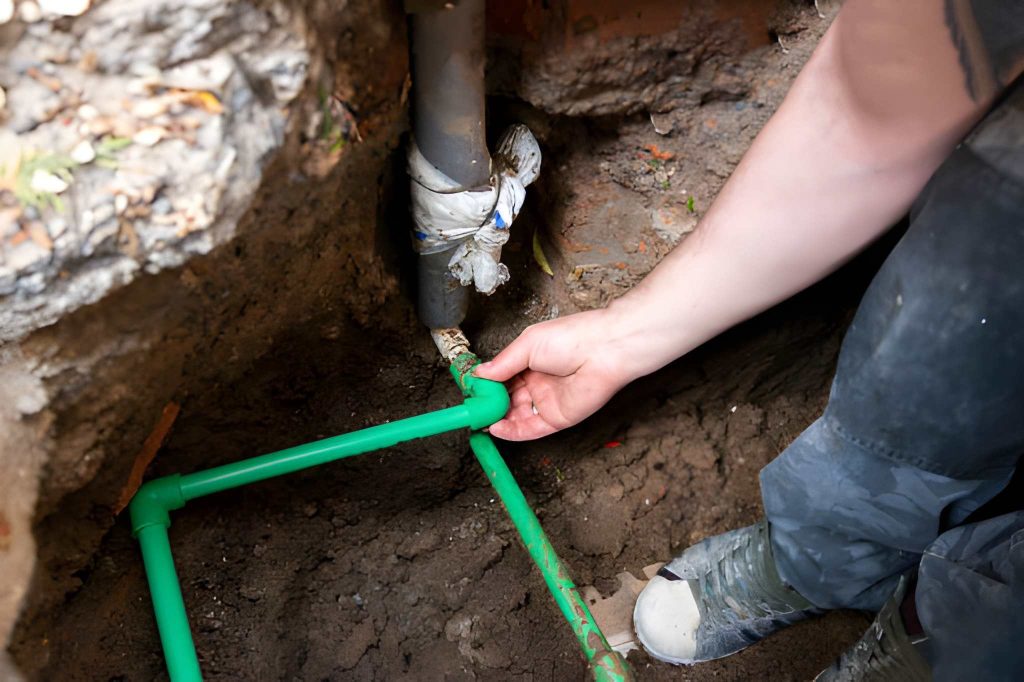
Slab Leak Detection Carson, CA
A Hidden Leak Under Your Slab Can’t Wait
Hearing water when everything is turned off? Noticing a sudden rise in your water bill, warm flooring, or damp spots around your home? A hidden slab leak can waste water and cause growing problems if the source remains unknown.
Prime Leak Detection provides professional slab leak repair carson city, CA, using specialized detection methods to help locate the leak and identify where attention is needed without unnecessary guesswork.
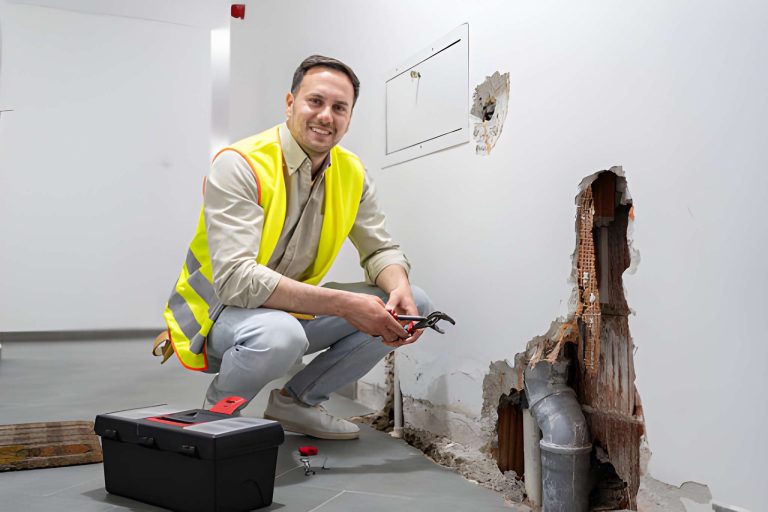
Is a Slab Leak Causing Problems in Your Carson Home?
A slab leak can be difficult to notice because the damaged water line is hidden beneath the concrete. You may only notice small changes at first, such as a water bill that suddenly seems higher, the sound of water running when no fixtures are in use, warm spots on the floor, or damp areas that have no obvious source.
Ignoring these signs can allow the leak to continue unnoticed. The first step is finding out whether a slab leak is actually present and locating its source.
That’s where professional slab leak detection in Carson can help. Using the right detection methods allows the problem to be investigated without relying on guesswork or immediately breaking into the slab.
Slab Leak Detection Services
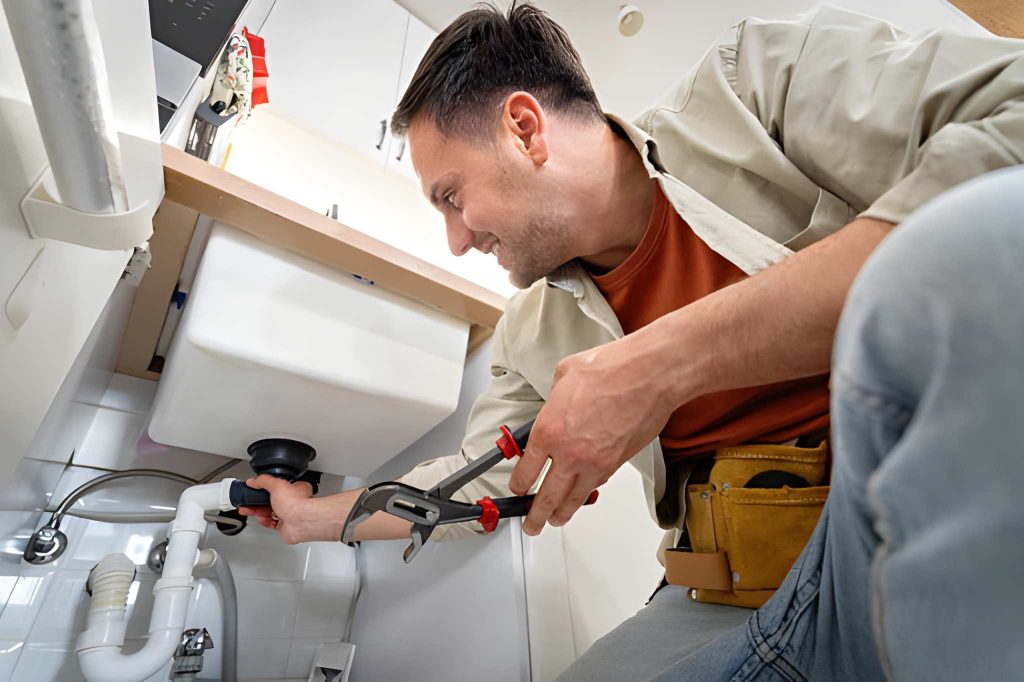
Slab Leak Detection Services in Carson
Not every slab leak shows up the same way, and finding the source often depends on understanding whether the problem involves a hot-water line, cold-water line, or another hidden plumbing issue. Here is a breakdown of the slab leak detection services we provide across Carson properties.
Hot Water Slab Leak Detection
Hot-water leaks beneath a slab can create warm spots on flooring or other unusual temperature changes. We use appropriate detection methods to help identify where a hot-water line may be leaking below the concrete.
Cold Water Slab Leak Detection
Cold-water line leaks can be harder to notice because they may not create a temperature change. Unexplained water usage, damp areas, or the sound of running water can point to a possible leak that needs further inspection.
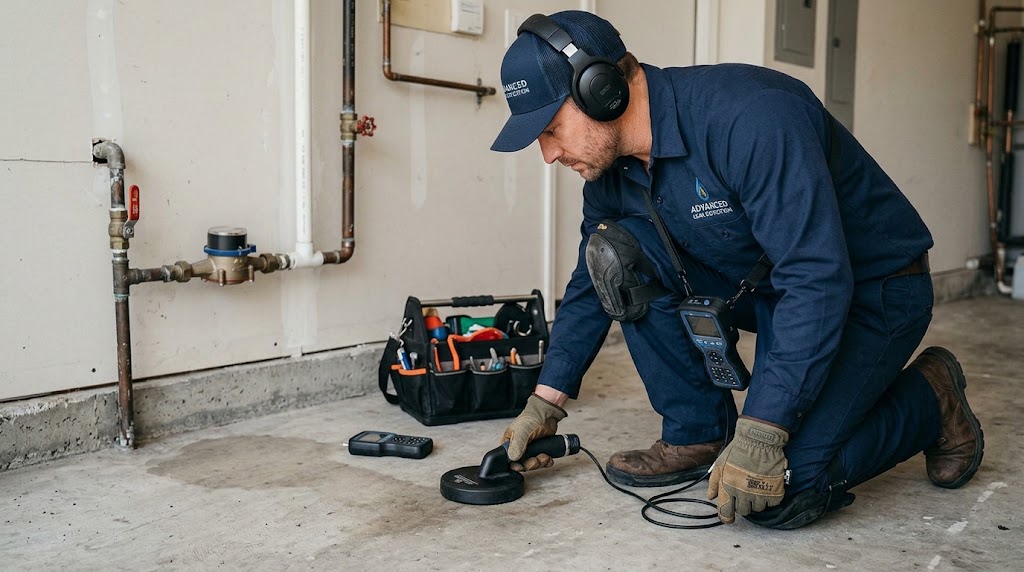
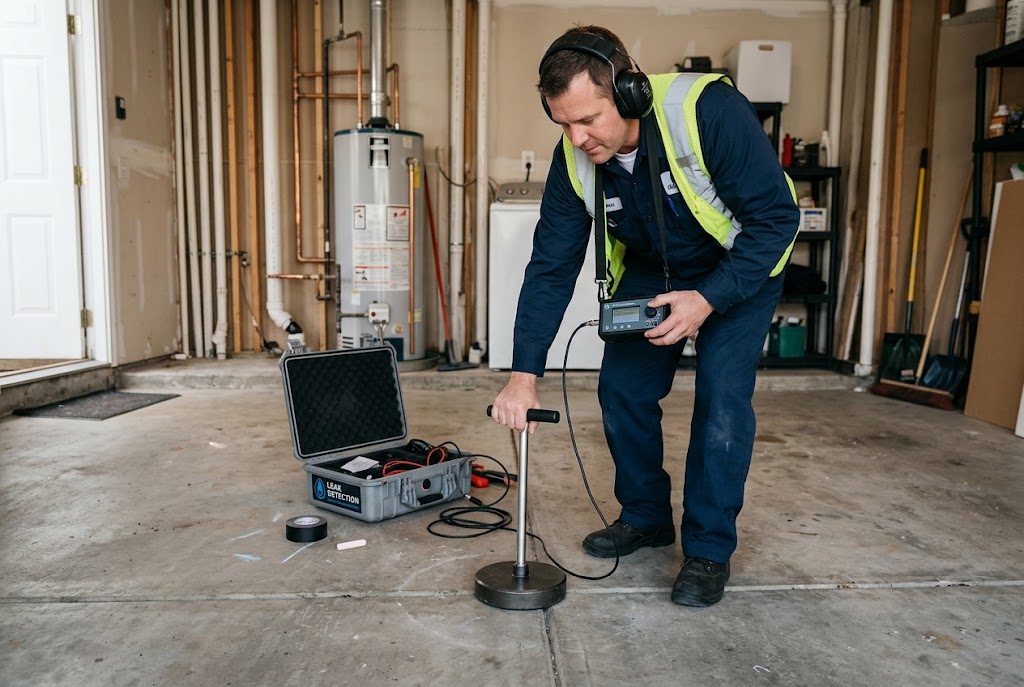
Electronic Slab Leak Detection
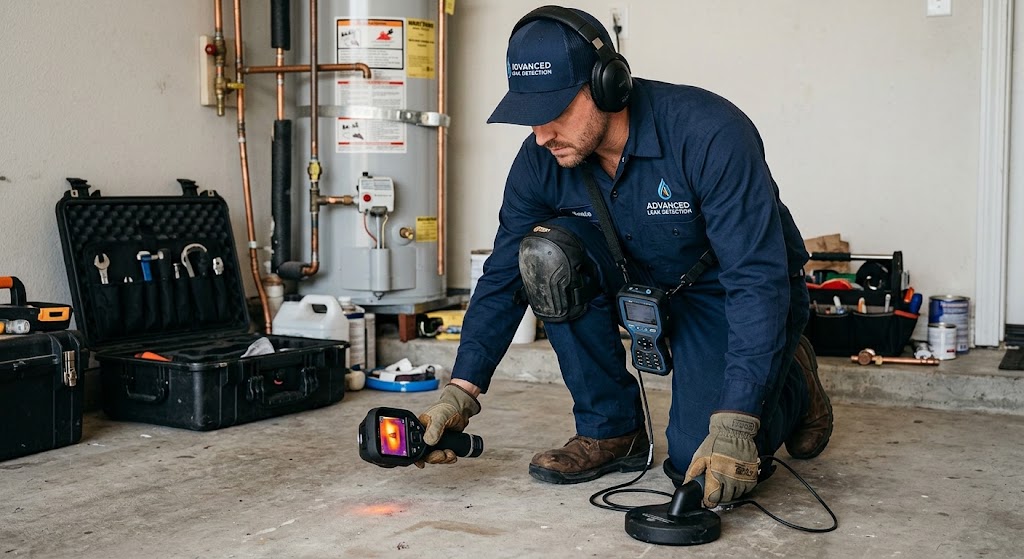
Electronic detection equipment can help locate hidden plumbing leaks beneath concrete by identifying signals associated with escaping water. This can help narrow down the suspected leak location before access is considered.
Acoustic Slab Leak Detection
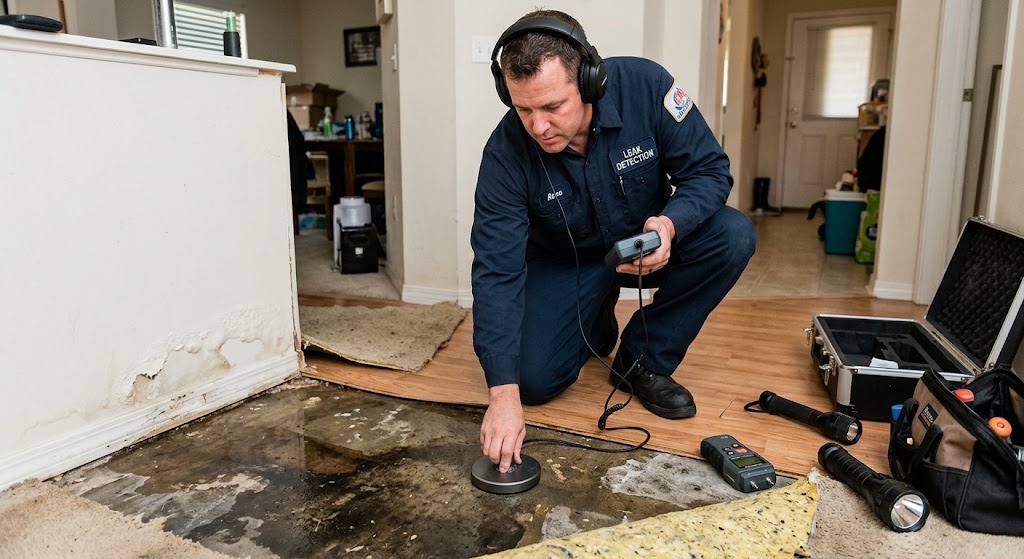
Escaping water can create sounds that travel through plumbing and surrounding materials. Acoustic detection uses specialized listening equipment to help identify these sounds and narrow down the location of a concealed leak.
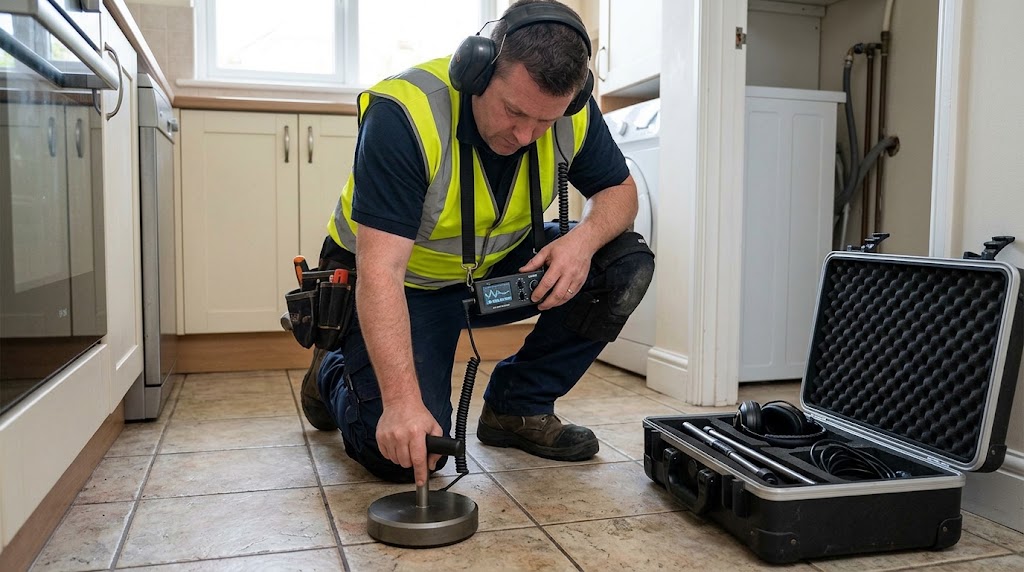
Slab Leak Inspection
A slab leak inspection focuses on the warning signs and conditions around the property that may indicate a leak beneath the slab. The inspection helps determine whether further detection is needed and where to focus the investigation.
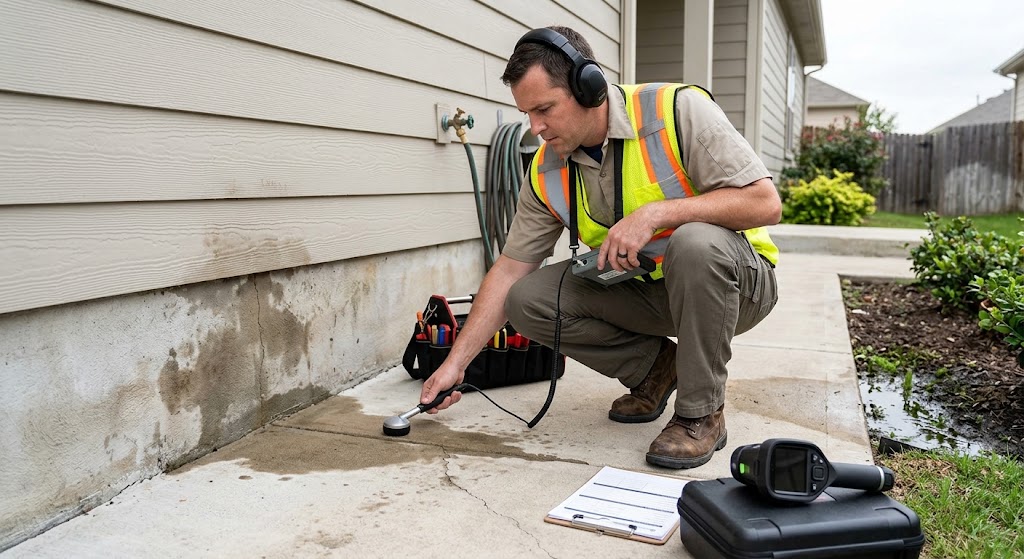
Emergency Slab Leak Inspection
When you notice active signs such as significant water loss, wet flooring, or water where it should not be, waiting may allow the problem to continue. An emergency slab leak inspection provides a prompt assessment to help determine the source and next step.
Our work Process
Finding a leak beneath concrete requires more than simply looking for visible water. We follow a focused process to understand the signs, test the plumbing, and narrow down the location of the leak before any access work is considered.
Initial Assessment
We start by discussing the signs you have noticed, such as unusual water usage, damp flooring, warm spots, low pressure, or the sound of running water. This helps us determine where to begin the investigation.
Check the Plumbing System
We assess the relevant water lines and perform appropriate testing to determine whether there is an active leak and which part of the plumbing system may be involved.
Locate the Leak
Depending on the situation, we use electronic, acoustic, and other suitable detection methods to narrow down the suspected leak location beneath the slab.
Confirm the Location
Once the likely source has been identified, we review the findings and confirm the location as carefully as possible before recommending the next step.
Explain the Findings
We explain what we found, where the suspected leak is located, and what options may be available for addressing it. This gives you a clear understanding of the problem before moving forward with repair work.
Why Choose Prime Leak Detection?
When a leak is hidden beneath a concrete slab, you need more than a quick guess. You need a clear assessment, the right detection methods, and straightforward communication about what we find.
Focused Leak Detection
We focus on locating the source of hidden water leaks rather than recommending unnecessary work before the problem is understood.
Specialized Detection Methods
We use appropriate electronic and acoustic detection methods to investigate leaks beneath concrete and narrow down the suspected location.
Clear Explanations
We explain what we find in simple terms, including the signs, testing results, and suspected leak location, so you can understand the situation before deciding on the next step.
Prompt Response
A suspected slab leak should not be left unchecked. We provide responsive service in Carson to help identify the problem as soon as possible.
Careful Approach
Our goal is to locate the leak with as little unnecessary disruption as possible. We assess the situation first before access or repair work is considered.
Straightforward Service
From scheduling to the final findings, we aim to keep communication clear and the process easy to understand.
How Long Does Slab Leak Detection Take?
The time needed to detect a slab leak depends on the plumbing layout, the location of the suspected leak, and how difficult it is to access or trace the water line. Some leaks can be located relatively quickly, while more complicated cases may require additional testing.
Our technician first assesses the signs and plumbing system, then uses the appropriate detection methods to narrow down the leak location. Once the suspected source has been identified, we explain the findings and discuss the next step with you.
The goal is not simply to finish quickly, but to locate the leak as accurately as possible without unnecessary disruption to your property.
Slab Leak Detection vs. Slab Leak Repair
Slab leak detection and slab leak repair are two different steps. Detection is about finding and locating the hidden leak, while repair focuses on fixing the damaged plumbing after the source has been identified.
Slab Leak Detection
Detection comes first. Specialized methods such as acoustic or electronic detection can help narrow down where the leaking water line is located beneath the slab. The purpose is to understand the problem before deciding how the plumbing should be accessed or repaired.
Slab Leak Repair
Repair begins after the leak has been located. Depending on the plumbing and property, the appropriate repair may require access to the affected pipe. The repair approach can vary based on the location and condition of the damaged line.
Why the Difference Matters
Knowing the difference helps you understand what you are paying for. Detection locates the problem; repair addresses the problem. A proper detection process can provide the information needed to plan the next step instead of starting repair work without first identifying the leak.
Frequently Asked Questions